

I was asked to speak at a Mind Circles Talk event this month about the Concept Of Self. The founder, her team, the venue and the audience were amazing. I wanted to share some of the key points explored by myself and the audience.
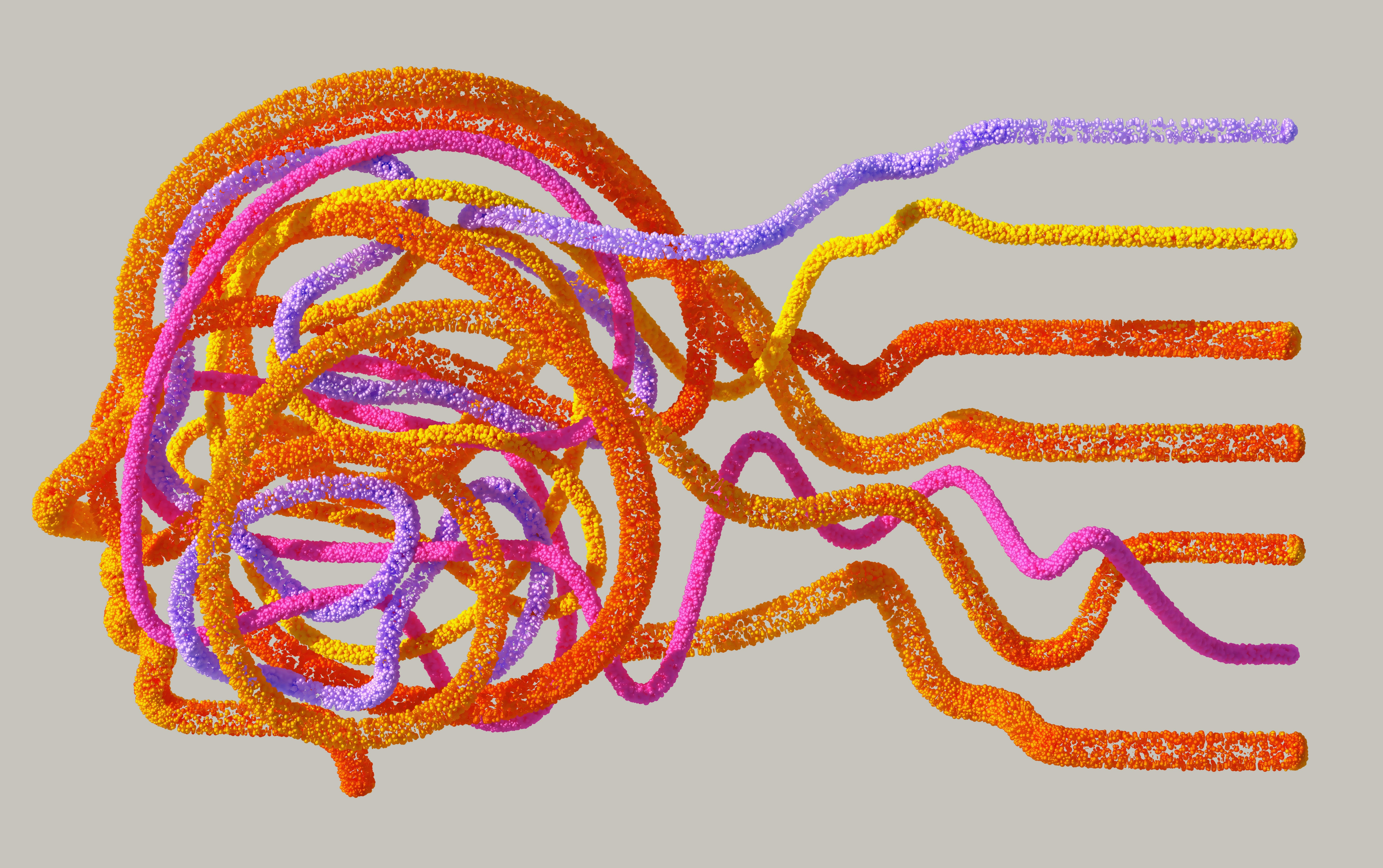
Our sense of self is woven together by key elements such as our past, our present, our biology, our psychology, our sense of safety and our simple and complex needs. Another reminder about the numbers behind our sense of self. The human brain contains approximately 86 billion neurons, but more importantly they form 100 trillion connections to each other! The numbers are beyond our own comprehension, we are all navigating the world with our own dynamic universe inside ourselves constructing ‘controlled hallucinations’.
Our own universe is communicating and interacting with different networks/systems (e.g. Digestive, respiratory, immune, cardiovascular, endocrine, reproductive. Default Mode Network, Salient Network, Central Executive Network. Fascia System) 24/7. A new field of neuroscience called connectomics is helping us to understand how neurons are connected to form interconnected networks. Their aim is to produce precise structural maps known as connectomes that may eventually give us insight into higher order interactions across emotion, thought and behaviour.
Our sense of self is interacting with multiple kinds of senses for us to interpret and perceive. Keep in mind as with all the senses our sensitivity to them are on a continuum.
Here are a handful of sensory examples:
Interoception - how we sense (or not) internally (e.g. heart rate, muscle aches, stomach pains, thirst, safety and so forth) in different environments, with different people.
Proprioception - how we sense our own body position, self movement or force (touch your nose with our eyes shut, balance, etc), it allows us to feel a physical sense of agency.
Exteroception - external senses, like sound. For example some people can find distinct sounds (e.g. chewing, crunching, heavy breathing or pen clicking) so overwhelming that it can cause an intense emotional or physical reaction, this is known as misophonia.
As we move through life we start to understand our own sensory make up, which contributes to how we can also learn to meet our own needs.
So what do I mean by needs?
As humans we have our basic physiological needs of air, water, food and shelter etc to survive. But the complex and meaningful needs are connected to the challenging stuff like: self worth, sense of purpose, sense of belonging and being comfortable in our own skin.
Here are just some of my own needs examples:
Breathing. I was a shallow breather, so I was not meeting my physiological need to give my lungs a full share of oxygenated air. I now try to consciously remember to breath deeply at certain points throughout the day.
Sense of purpose. I didn’t believe in my own strengths or capabilities so could easily dismiss any need relating to purpose. My mind works by seeing the bigger picture, so I would struggle with short-termism. Following my passion (neuroscience, sense of self, wellbeing etc) enabled me to align with my purpose and start using my voice to try and make meaningful change.
Food. As a child my diet needs were met but as an adult my beliefs and commitment to animals and the planet have changed. I have consciously chosen to not eat meat and fish for the past 7 years.
Feeling physically and psychologically safe. As I often touch on the nervous system does so much work out of conscious awareness with the senses interacting with our complex memory systems. I spent many years being on high alert regardless of being ‘safe’ in the present moment. By working with my nervous system I continue to understand its needs to feel grounded and ‘embodied’ in my body.
What I am keen to demonstrate here is how the physical, psychological and emotional elements of being human are all inextricably linked and are personal to each individual- our own distinct neuronal signature! We are messy and contradictory beings processing many conscious and subconscious elements. Try to give yourself some time and space to listen to the body and make friends with your nervous system because it is communicating valuable lessons throughout our lifetime.